
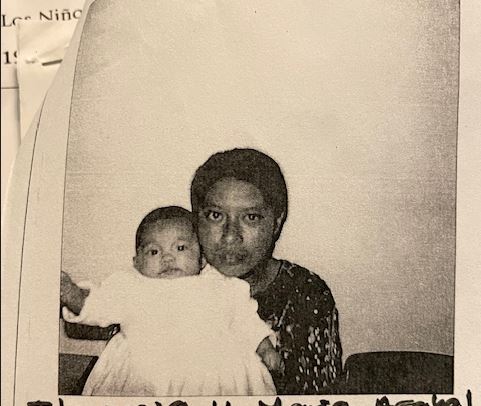
Mother and daughter reunited after more than 30 years — the outcome of a birth parent locate investigation conducted by Cody L. Gear & Associates in Nicoya, Guanacaste.
Some cases are about evidence. Some are about money. And then there are cases like this one — where the only thing at stake is whether two people who have spent more than three decades wondering about each other will ever get the chance to sit in the same room.
My client, a woman from Los Angeles, came to us with a request that was both simple to state and enormously difficult to execute: find her birth mother in Costa Rica. She had a name, a date of birth, and a photograph taken sometime in the mid-1990s. The birth mother's last known location was Nicoya, in the Guanacaste province — a detail from thirty years earlier that may or may not have still been true. We took the case.
Starting Point — What We Had to Work With
The investigation began where every locate investigation begins: with whatever the client can give us and the discipline to treat each piece of information as a potential thread rather than a dead end. The name and date of birth allowed us to pursue the Costa Rican national identification system — the cédula — which provided a starting point for cross-referencing employment records, residential registration logs, and municipal documentation from the Nicoya area going back to the mid-1990s. In cases involving adoptions and birth family searches, PANI — the Patronato Nacional de la Infancia — is the governing authority in Costa Rica for all matters involving children, and understanding how its records and processes interact with a locate investigation is essential knowledge for any investigator working this type of case here.
Costa Rica presents specific locate challenges that investigators unfamiliar with the country consistently underestimate. There is no standardized street addressing system across much of the country — particularly in rural Guanacaste, where directions are still given by landmarks and distances from points that may no longer exist. Public records for the period in question were sparse and inconsistently maintained. The birth mother had relocated multiple times in the intervening decades, leaving a fragmented trail that required ground-level contacts and local knowledge to piece together. These are not obstacles you navigate from a desk in the United States. They require someone already embedded in the country, with the relationships and institutional access that 27 years of local operations produce.
"Every locate investigation is a puzzle built from incomplete pieces. The discipline is in knowing which pieces matter and being willing to go find the ones that aren't in front of you."
The Investigation — How We Found Her
Leads from the archival records pointed toward the mountainous regions surrounding Nicoya — rural terrain that requires on-the-ground presence to work effectively. We engaged local contacts with direct knowledge of the area, conducted discreet inquiries through community networks, and cross-referenced every emerging lead against the documentary record we were building in parallel. As new information surfaced, we adapted — this is the nature of a locate investigation that spans decades of elapsed time. The trail is never straight.
On March 17, a two-person investigative team was dispatched into the Nicoya region. Working in coordination with local municipal authorities and through the regional administrative office, our team gained access to a resident registration log that confirmed what our investigation had been pointing toward: the birth mother was still living in the region. Thirty years, multiple relocations, and a country with no standardized address system — and she had ultimately come back to where she started.
First Contact
Making initial contact in a birth parent locate case requires a different kind of skill than most investigative work. The person on the other side of that door has no idea you are coming. They may not know a search has been conducted. They may carry complicated feelings about the adoption — feelings that have had thirty years to settle into whatever form they have taken. Approaching that situation badly can close a door that will never open again.
Our investigators introduced themselves carefully and explained the nature of the search with full transparency — who the client was, what she was hoping for, and that there was no obligation on the birth mother's part beyond listening. Upon learning that her daughter was alive, had grown up well, and was seeking to reconnect, the birth mother's response was immediate: shock, then tears, then agreement to meet as soon as it could be arranged.
The Reunion
On April 12, the client traveled to Costa Rica and met with our team. We made our way together toward Nicoya — the roads into the region are rough, the kind that remind you how far you are from the world the client had flown in from. Neither of us had anticipated what was waiting at the other end of them.
We arrived to find approximately thirty people gathered outside the house.
Not just the birth mother. The entire extended family had come — siblings, cousins, aunts, neighbors, children — word had spread through the family network in the days since first contact, and they had all made the trip to be there. Among them were step-siblings our client had never known existed: brothers and sisters she had grown up an ocean away from, who had spent their own lives not knowing she was out there.
The birth mother stepped forward first. She took her daughter's hands and studied her face — now grown, now confident, now standing in front of her after more than thirty years. For a long moment, neither of them spoke. Then the rest of the family moved in around them, and what had begun as a reunion between two people became something larger and louder and more alive than any of us had planned for.
My client had flown to Costa Rica hoping to find her birth mother. She left with a family.
Case Timeline
Initial Engagement — March 2025
Client approached Cody L. Gear and Associates with a name, date of birth, and a photograph from the mid-1990s. Last known location: Nicoya, Guanacaste. Investigation opened.
Archival Research Phase
Cédula verification, employment and residential records, municipal registration logs, and regional community contacts pursued in parallel. Trail leads to mountainous regions surrounding Nicoya.
Field Deployment — March 17, 2025
Two-person investigative team dispatched to Nicoya region. Coordination with local municipal authorities and access to resident registration log confirms birth mother's current location.
First Contact
Investigators make respectful, transparent initial contact with birth mother. She agrees to a reunion with her daughter.
Reunion — April 12, 2025
Client travels to Costa Rica. Approximately 30 family members — including extended family, step-siblings the client had never known — gathered to welcome her. Mother and daughter meet for the first time since infancy. More than 30 years of separation closes in a single afternoon.
Frequently Asked Questions
How long does it take to locate a birth parent in Costa Rica?
It depends entirely on the quality of the starting information and how much has changed in the intervening years. Cases with a reliable name, date of birth, and last known location can sometimes be resolved within weeks. Cases with minimal documentation — a first name, an approximate region, a decades-old photograph — may take considerably longer or may require managing expectations about what is achievable. I will tell you honestly what I think is possible before we begin, not after.
Can you find a birth parent in Costa Rica if I only have partial information?
Partial information is the norm in these cases, not the exception. Thirty years is a long time, and most clients do not have a complete record to work from. What matters is having enough to start — a name, a approximate location, a date of birth — and then applying the investigative methodology and local access that can build outward from that starting point. I have been working in Costa Rica since 1997. The country's records systems, its municipal networks, and its community structures are not foreign territory to me.
Is it legal to search for someone in Costa Rica through a private investigator?
Yes. Locate investigations conducted through publicly available records, municipal databases, and community inquiry are fully legal in Costa Rica. We do not conduct searches through methods that compromise privacy rights or violate Costa Rican law, and every case is handled with the ethical standards that 27 years of professional practice in this country demands.
Will my identity remain confidential during the search?
Yes — until and unless you decide otherwise. We do not disclose the client's identity during the investigative phase. Initial contact with a located individual is made on neutral terms, with no identifying information about the client shared until the located person has indicated their willingness to engage. You control when and how your identity is introduced into the process.
What if my birth parent doesn't want to make contact?
We respect that outcome fully. Not every locate case ends in a reunion, and a birth parent's decision not to engage is not one we override or pressure. If the person we locate expresses a wish not to reconnect, we communicate that outcome to you with honesty and care — and, if you wish, confirm that they are alive and well, which for some clients is enough.
What if I only want to know they are alive and safe, not necessarily reconnect?
That is a legitimate and complete outcome for many clients. The investigation proceeds the same way — we locate, we make discreet inquiry, and we return to you with confirmation of the person's current status. What happens next is entirely your decision. There is no requirement that a locate investigation end in a reunion.
What happens after you find my birth parent?
We present you with the findings and discuss your options before any contact is made. From that point, you direct the next step — whether that is direct contact, a facilitated introduction through our team, a letter or message delivered on your behalf, or simply the knowledge of where they are and how they are doing. The pace and shape of what follows is yours to determine.
Case documented by Cody L. Gear, CFE · Nicoya, Guanacaste, Costa Rica · April 2025 · Updated April 2026. All identifying details have been modified to protect client and family confidentiality.

