
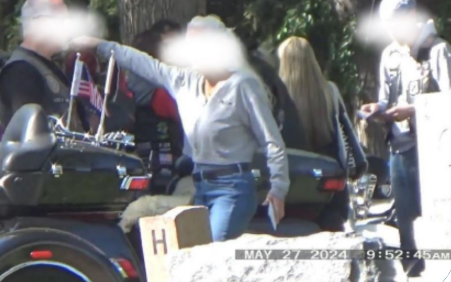
Dominical, Costa Rica — site of a two-week field surveillance operation conducted on behalf of a U.S. lawyer to document the daily activities of a personal injury claimant.
A United States national lawyer engaged Cody L. Gear and Associates to conduct surveillance on a claimant involved in a personal injury lawsuit pending in the United States. After filing the lawsuit, the claimant had relocated to Dominical — one of Costa Rica's most recognized surf destinations on the southern Pacific coast. The detail that made this case particularly striking: prior to the accident that formed the basis of the lawsuit, the claimant had authored a book about surfing. The lawyer needed documentation of whether the claimant's daily activities were consistent with the severe physical limitations they had reported to the court. What followed was a two-week field operation in Dominical that produced over 100 hours of combined documentation — including footage of the claimant surfing on nearly every day of the operational period.
What follows is the operational summary and findings delivered to legal counsel upon case completion.
Why This Case Required a Costa Rica Investigator
Dominical is not an accidental choice for someone who surfs. It sits on a stretch of the southern Pacific coast known for consistent swells, a relaxed beach culture, and a community built almost entirely around the water. If you wrote a book about surfing and needed somewhere to recover from an injury that prevented you from physical activity, Dominical is arguably the last place you would choose. Unless, of course, the injury was not what you reported it to be.
Personal injury claimants who relocate internationally after filing suit present a specific investigative challenge — domestic surveillance resources cannot follow them across a border. What this case required was an investigator already embedded in Costa Rica, fluent in the country's geography, and capable of operating in a small coastal community where a stranger asking questions or parking in the same spot for two weeks would be immediately noticed. My team had coordinated with Privin Network on similar cross-border assignments before and we understood precisely what the lawyer needed: a sustained, admissible record of the claimant's actual physical capabilities — not a single incident, but a documented pattern that no opposing attorney could dismiss as an anomaly.
Surveillance Strategy and Execution
Prior to beginning fieldwork, we mapped the claimant's likely routes, residential area, and the locations they were most likely to frequent based on information provided by the lawyer. Dominical has a compact geography — a short main road, a cluster of surf shops, open-air restaurants, and direct beach access that draws the same community together daily. In a town that size, patterns establish themselves quickly. By the end of the first week we knew the claimant's routine as well as anyone who lived next door to them. We maintained multiple mobile vantage points with high-resolution zoom cameras, conducted discreet interviews with members of the local community who had direct knowledge of the claimant's activities, and documented behavior continuously across the full fourteen-day operational period — including surfing activity captured on nearly every day of the operation.
The first week focused on establishing the claimant's behavioral baseline — identifying daily routines, frequented locations, and the physical activity patterns that would form the evidentiary core of the case. Continuous video and photographic documentation was maintained across each day, with discreet community interviews conducted to corroborate observed behavior and establish local context. Every frame timestamped and location-anchored from day one.
The second week confirmed and extended the behavioral record established in week one. The claimant's activity remained consistent throughout — the same locations, the same physical capabilities, the same absence of any accommodation for the limitations reported to the court. By the close of the operation, the documentary record was unambiguous and comprehensive: over 100 hours of combined video footage, photographs, and documented interview findings, organized for direct use by litigation counsel.
Key Findings
The claimant was documented surfing on nearly every day of the two-week operation. Not wading. Not watching from the shore. Surfing — paddling out through the break, reading the swells, riding waves, and returning to do it again. This was a claimant who had written a book about surfing before the accident that supposedly ended their physical capacity to engage in strenuous activity. In Dominical, one of Costa Rica's most consistent surf breaks, they had apparently found their recovery.
Beyond the surfing, the documentary record captured the claimant walking freely across uneven beach terrain, carrying equipment, socializing at local establishments, and moving through the community without any visible accommodation for the physical limitations reported to the court. The behavior was consistent across fourteen days — not an isolated good afternoon, not a single moment that opposing counsel could contextualize away, but a sustained pattern documented from the first day of the operation to the last.
"He wrote a book about surfing. He moved to one of the best surf towns in Costa Rica. And for two weeks, we documented him surfing almost every day. The injury that ended his physical life had apparently made an exception for the Pacific."
Every observation was captured through timestamped video and still photography from multiple vantage points, with clear identification of the claimant maintained throughout. Community interviews conducted during the operation corroborated the documentary record and provided additional context about the claimant's activities and local reputation. All documentation was prepared from the outset to meet the admissibility standards of U.S. federal and state court proceedings.
Evidence Delivered
At the conclusion of the two-week operation, the lawyer received a complete evidence package structured for direct use by litigation counsel — over 100 hours of combined video footage and photographs, a full indexed image gallery, detailed investigator field logs with location validation, and documented findings from discreet community interviews conducted throughout the operational period. Everything organized so that attorneys could move from the investigative record to their legal strategy without requiring additional documentation or clarification.
The documented evidence provided the lawyer with substantial, objective support for challenging the claimant's reported physical limitations — a record the lawyer could present to opposing counsel, introduce at deposition, or bring before the court as circumstances required.
Frequently Asked Questions
Is surveillance of a personal injury claimant legal in Costa Rica?
Yes — when conducted from public-access locations by a qualified investigator. Observation and documentation of a claimant's activities in public spaces is lawful in Costa Rica and does not require the claimant's consent. I have conducted this type of operation in Costa Rica for 27 years and every engagement is structured to remain fully within the legal parameters of both Costa Rican law and U.S. evidentiary standards.
Can Costa Rica surveillance evidence be used in a U.S. court proceeding?
Yes. When properly documented by a qualified investigator — timestamped, location-anchored, chain of custody maintained, and prepared by someone who can be qualified as an expert witness if needed — surveillance evidence gathered in Costa Rica is admissible in U.S. civil and federal proceedings. I have provided expert witness testimony in both civil and criminal court proceedings and build every case file with that standard in mind from the first day of fieldwork.
How does surveillance support a personal injury defense?
A documented visual record of a claimant's actual physical capabilities — sustained over a full day of normal activity — provides opposing counsel with objective evidence that does not depend on interpretation or expert opinion. It shows, rather than argues. In cases where a claimant's reported limitations are inconsistent with their observed behavior, that record becomes one of the most powerful tools available to the defense.
Can you conduct surveillance on a claimant who has relocated to Costa Rica from the United States?
Yes — and this is precisely the scenario where a permanent in-country investigator provides the most value. Domestic surveillance resources cannot follow a claimant across an international border. A visiting investigator lacks the local knowledge, established logistics, and operational familiarity that complex field surveillance requires. My team is based in Costa Rica full-time, and we can be deployed on assignments of this kind with the preparation and efficiency that a lawyer's case timeline demands.
Case documented by Cody L. Gear, CFE · Costa Rica · Cody L. Gear & Associates · Updated April 2026. All identifying details have been modified to protect client and claimant confidentiality.
